
Finding Woodburn Residents Through Records
Woodburn sits in Marion County, so the best record path turns on whether the starting point is an address, a name, or an earlier household. The public property record is an address-to-owner bridge, not a household list. A recorded document can place a person in a transaction. Historic directories and library collections can place a name in a particular period. Court and vital records have narrower rules. Begin with the record that answers the small question, then confirm it through another official source.
A sound sequence avoids a common mistake. One index match can belong to a namesake, an owner who receives tax mail elsewhere, or a record from the wrong era. Compare a physical address, legal description, dates, party role, and the source’s stated coverage before connecting a result to a Woodburn resident.
- Search a known address in the county property record for the situs, tax lot, legal description, and recorded owner.
- Use City or county mapping to check the parcel and its boundary context.
- Follow owner and party names into the Clerk’s recorded-document routes.
- For earlier households, compare a directory volume, census release, and archive source.
- Send a focused written request for a record that is not published online.
Woodburn streets and addresses need a separate parcel-first method when the question concerns one block or a named street.
Woodburn Resident Records Offices
Woodburn has municipal files, but the principal property, recording, election, and circuit-court counters are in Salem. The Clerk records instruments affecting Marion County real property and supports historic archive access. The Assessor supplies the parcel and tax-roll view. Elections administers registration and official list procedures. Each answers a different question, so a request should name the record, date range, address, parcel, or document number rather than ask staff to create a resident list.
The Woodburn City Recorder holds city business records and coordinates the City’s request path. The City policy follows Oregon’s response sequence, generally acknowledging or responding within five business days and then completing, estimating, or otherwise responding within another ten business days. That is a fallback when the record belongs to the City rather than the county.
Marion County Assessor
Property records and owner assistance
Marion County, Oregon
503-588-5144
Marion County Elections
555 Court St. NE, Suite 2130
Salem, OR 97301
503-588-5041
Woodburn Addresses Open Parcel Records
The Marion County Assessor search accepts account number, map-tax-lot, situs address, and subdivision. Its public form does not have a separate owner-name category. Once a parcel is found, its card can show the owner name and mailing address, situs address, map-tax-lot, property ID, legal description, subdivision, value, and exemption fields. County staff can provide owner name and mailing address from an address or location by phone.
These are different address types. Situs means the physical property location. An owner address is where tax correspondence is sent, and can be a post-office box, care-of address, or a different location. The legal description and map-tax-lot are the durable keys for carrying a property question into the deed index and plat research.
| Woodburn property field | Use in a resident search |
|---|---|
| Situs address | Locates the physical property from a known house number and street. |
| Map-tax-lot | Links mapping and property research to a specific parcel. |
| Account number | Returns the parcel account when an existing record already provides it. |
| Subdivision | Can narrow a search for a known Woodburn plat or development. |
- Parcel
- A defined property unit in the assessment system.
- Situs address
- The physical property location, separate from tax correspondence.
- Legal description
- The property key used to keep a deed trail on the correct lot.
- Index
- A finding aid that points to a record, not always the record image.
Note: A parcel card can confirm a recorded ownership and tax-mailing relationship, but it does not identify every person in a Woodburn household.
Woodburn Deed Indexes Cover Two Eras
Marion County divides its online recording history. Its Records and Archives page labels the historic deed search as 1855-1976 and the current recorded-documents route as 1974-present. The historic portal itself says available documents exist for 1850-1976. Preserve that disagreement instead of inventing a starting year. For a transfer in the 1974-1976 overlap, check both systems and confirm an unresolved gap with the Clerk counter, where public searching and viewing are free.
The Digital Research Room offers party, recording-date, document-type, subdivision, lot, block, township, range, section, legal-description, and map controls. A return address on an instrument is a delivery address for the document. It is not evidence that a person currently lives at a Woodburn property.
The current Marion recording screen shows why a legal description and date filter matter more than a broad city-name search.
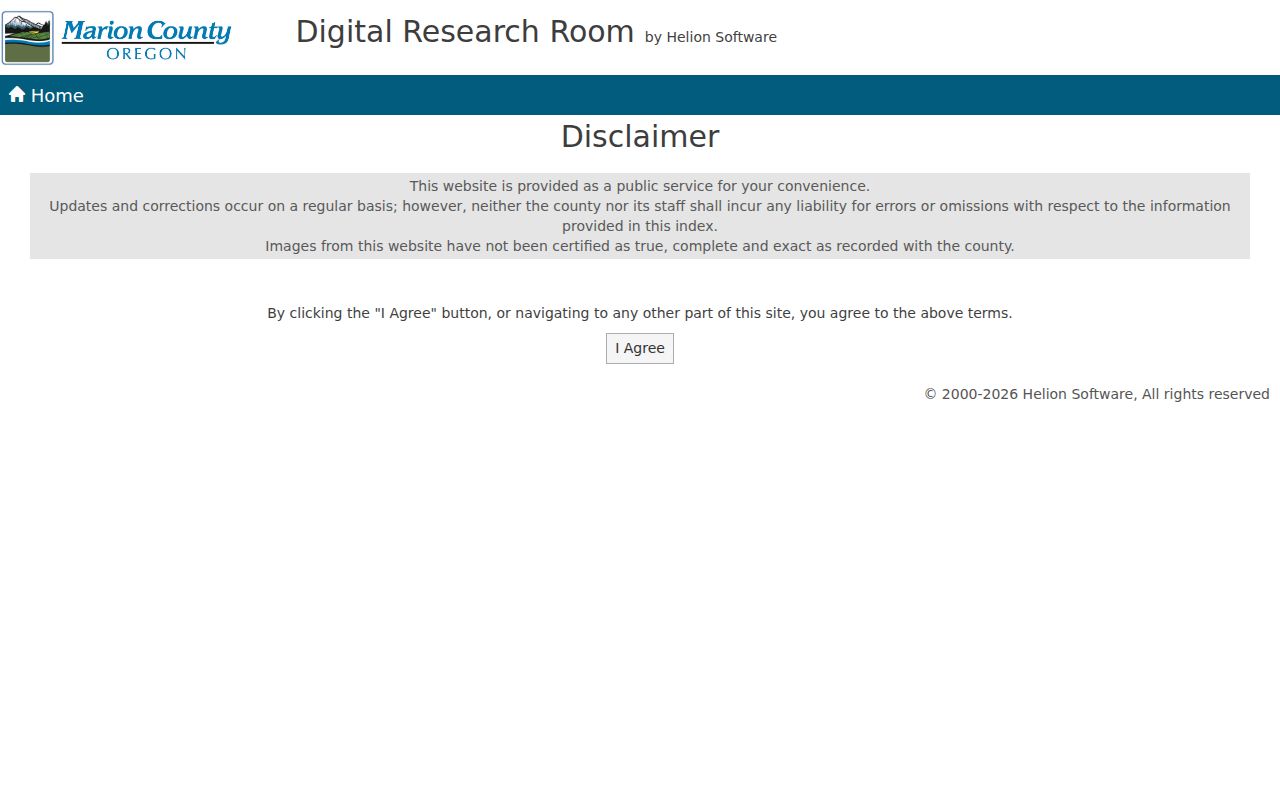
Use the portal’s party and legal-description fields together, then request a certified copy from the Clerk if the recorded original matters.
Woodburn Current Resident Directory Sources
No official Woodburn directory lists every person living in the city. Each source documents a narrower relationship. The property record documents ownership and tax correspondence. A voter list is available only by the statutory request route and has exclusions. Court results document public cases, not a home address. City GIS maps address and tax-lot context. Matching a source to its real scope keeps Woodburn research useful.
Official sources provide a documented custodian, stated coverage, and a correction path. Commercial search services can be incomplete or stale and cannot replace the custodian’s original record. When an identity, date, or property connection matters, check the original office rather than treating a compiled result as proof.
| Woodburn source | What it can establish | Keeper | Access route |
|---|---|---|---|
| Assessor parcel card | Recorded owner, mailing address, situs, tax lot | Marion County Assessor | Address search or staff assistance |
| Recorded documents | Parties, transactions, legal-description trail | Marion County Clerk | Historic/current index, counter, copy request |
| Elector file | Statutorily public fields, subject to exclusions | Oregon and county elections | Official voter-list request |
| City GIS layers | Addresses, streets, tax lots, city-limit and UGB context | City of Woodburn | Public mapping service |
| City records | Existing municipal files tied to an identified matter | Woodburn City Recorder | Written public-record request |
Woodburn Voter Records Use Two Routes
Oregon My Vote is self-service. A voter can check registration, view or update registration information, check ballot status, find county election contacts, and find officials or drop sites. It is not a public name or street browser. The public list route is separate, and the Secretary of State permits up to ten business days for statewide or less-than-statewide electronic list requests.
ORS 247.948 identifies public elector-file fields and also excludes birth month and day, Social Security numbers, driver-license numbers, signatures, Address Confidentiality Program information, and specified protected voters. Participation shows whether a ballot was cast, never the voter’s selections. List use has a statutory commercial-use restriction.
The official voter-list request page identifies the lawful request channel and published list fees.
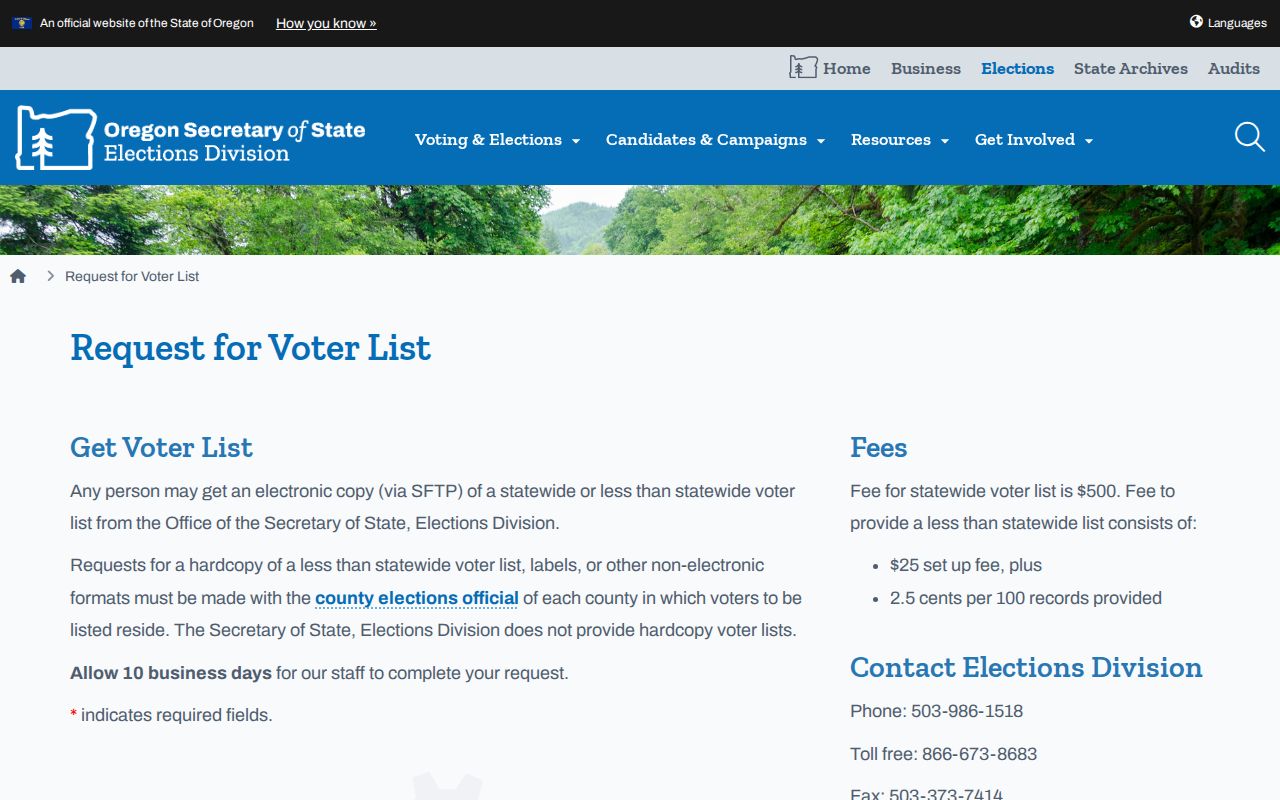
Use a list only within the statutory limits and do not treat a protected or absent entry as proof that someone is not connected to Woodburn.
Woodburn Court Names Need Context
Marion County Circuit Court is the county-level court route for Woodburn. Oregon’s free records and calendar search provides basic public case information and calendars, while the filing court retains the official file. A public register can show party names, case number, location, filing events, hearings, judgments, and status. It does not provide the document image, and protected categories such as adoption, juvenile, mental-health, and certain VAWA matters are not lawful targets for a search.
Marion Circuit Court has six free public terminals in its Downtown Courthouse records lobby. Record copies may be requested by form or mail. The separate subscription OJCIN service covers Register of Actions and judgment records statewide, but it is not the official court file. Narrow a name result by court, case number, dates, and other reliable facts before associating it with a Woodburn resident.
The Oregon eCourt entry screen is the official starting point for free public court access.
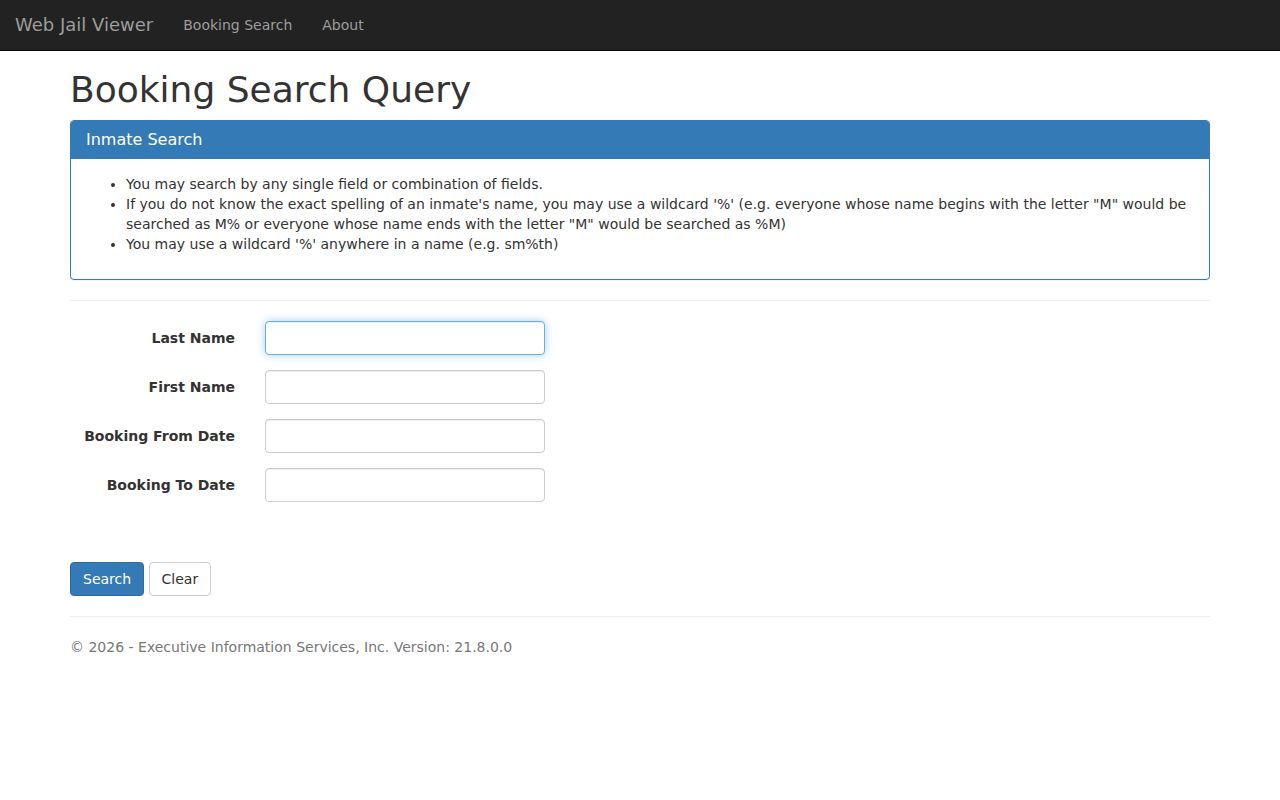
Current custody information is separate from court files, and a blank roster or court result does not prove that no record exists.
Woodburn Vital Records Have Limits
Oregon Health Authority’s Center for Health Statistics is the enduring statewide custodian for vital certificates. Under ORS 432.121, historic access follows different thresholds from a current certified copy: 100 years after a live birth and 50 years after death, fetal death, marriage, domestic partnership, divorce, or dissolution, subject to the statute’s event-year language. Current certificates require an eligible applicant and identity evidence.
Marion County Vital Statistics can process a birth certificate only when the birth occurred in Marion County and the request is within six months. After that, the state route applies. A historic index, an archival record, and a current certificate do not have the same access, fields, or proof value.
The Oregon vital-record fee page compares the state ordering channels.
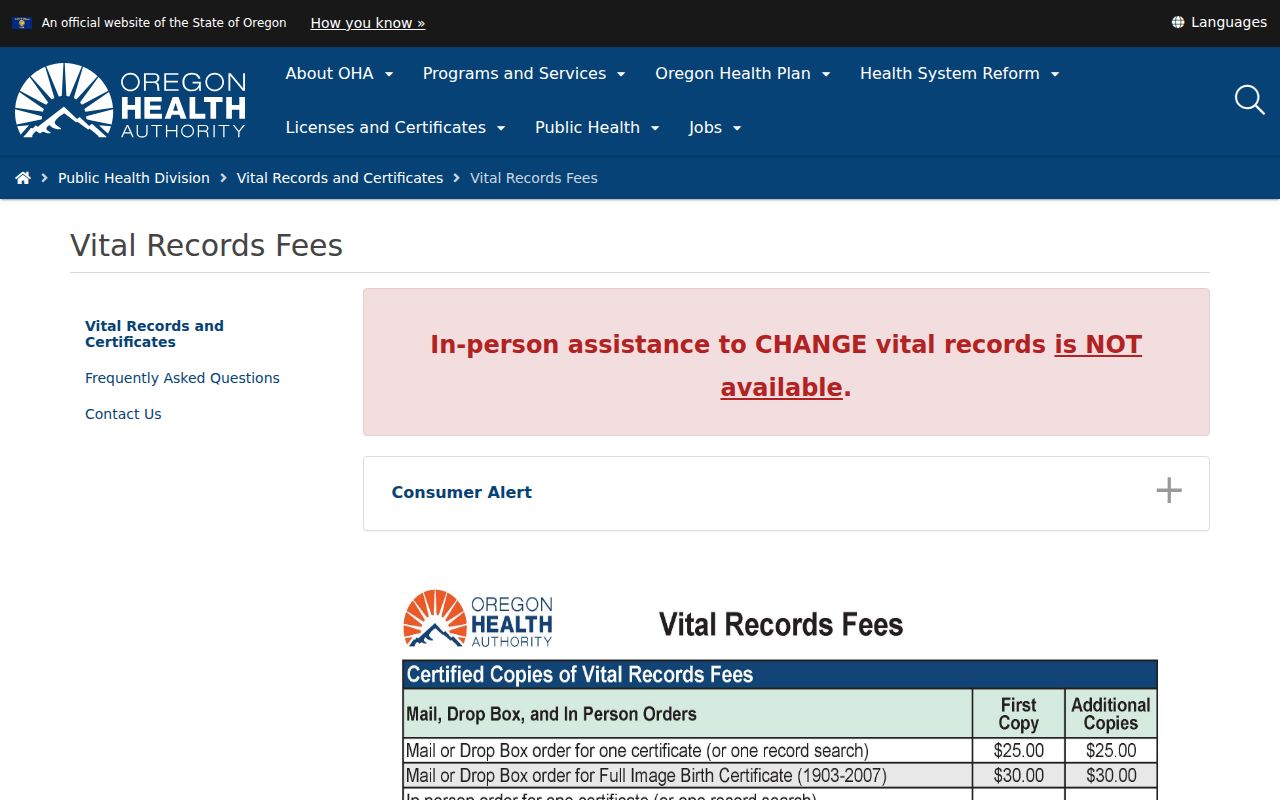
Select the custodian and period first, then use the form that matches archival research or an eligible certificate order.
Woodburn Historical Resident Directories
Woodburn’s strongest documented directory route is the R. L. Polk Salem City and Marion County series rather than a continuous standalone Woodburn shelf. Verified runs begin with an 1889-90 title and include later Salem, Marion, Salem/Silverton/Woodburn, and business-guide segments through the reviewed 1960 entry, with known gaps. The collections can contain Woodburn alphabetical names, civic lists, business layers, and street-guide clues, but an actual volume must be read before claiming an individual entry or abbreviation.
Woodburn Public Library provides Ancestry Library Edition and catalog access. Willamette Heritage Center in Salem is the deeper archive fallback for directories, photographs, house-history questions, and cataloged regional material. Woodburn city directories has the collection years and household-tracing method.
Woodburn Public Library’s digital resources identify the licensed research collection available through the library.
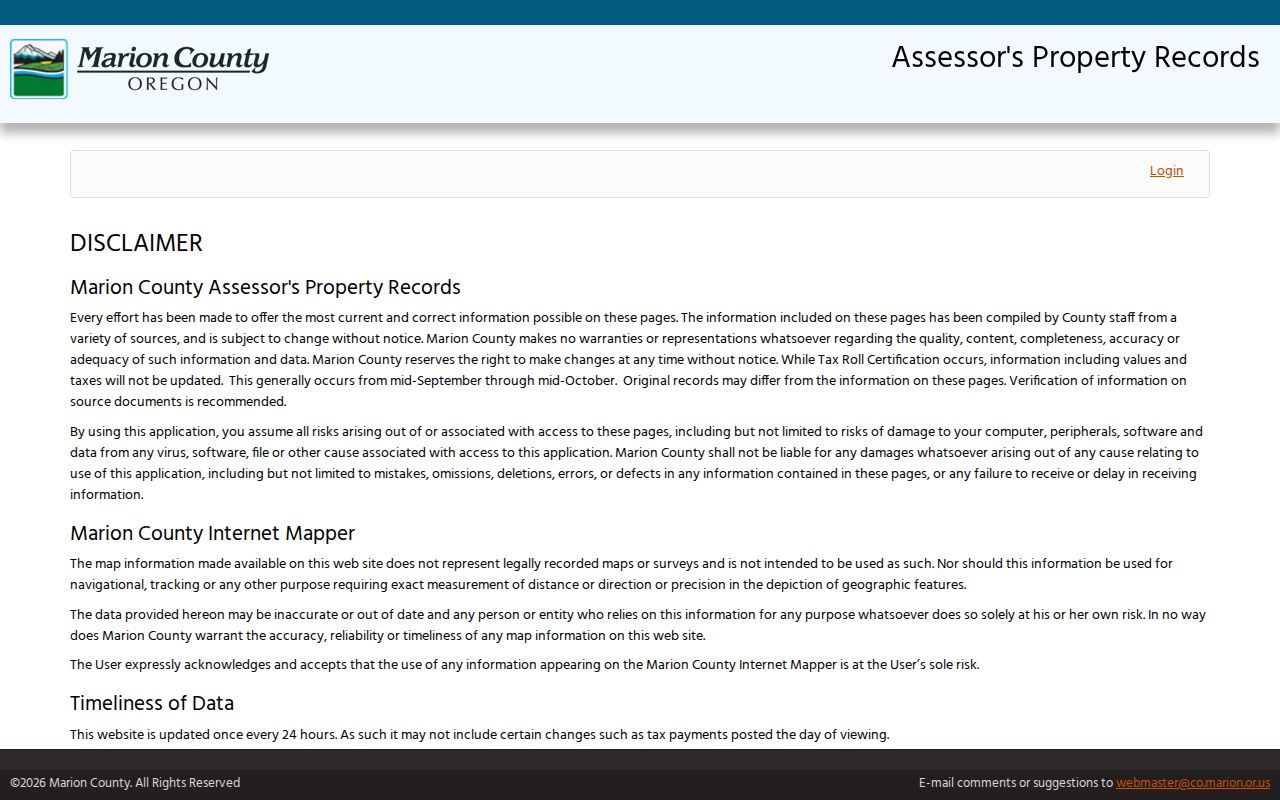
A current parcel result is a useful bridge from an old address to a legal description, but it cannot rewrite a historic directory year.
Woodburn’s Halsey Search Quirk
Early Woodburn research can fail when a modern place name is used alone. The city was known early as Halsey, was platted in 1872, and incorporated as Woodburn in 1889. Older material can also appear under French Prairie, rural Marion County, or the county’s earlier Champoeg or Champooick terminology. That local naming shift is a practical reason to search variants in directories, newspapers, maps, deeds, and archives.
Woodburn has a useful visual sequence for address history: 1878 atlas excerpts, six Library of Congress Sanborn map dates from 1890 through 1913, City aerial panels dated 1961, and current tax-lot mapping. Each source establishes place and time differently. None identifies every household without a matching directory, deed, census, or other original record.
Woodburn Lookup Privacy Boundaries
Oregon protects some information even when other records are public. The Address Confidentiality Program uses a substitute address for qualifying participants. Oregon has a voter residence-address exemption process, and voter files exclude protected fields. Vital certificates and some court records have their own access rules. DMV personal data is not a public address-directory fallback. These limits are part of accurate research, not obstacles to work around.
Lawful personal research. Use records to reconnect with family, document property history, or check a public matter. Do not use information to stalk, threaten, harass, or harm anyone.
Note: A missing result can reflect limited coverage, a protected record, a name variation, or the need to contact the proper custodian.
Woodburn Requests Fill Record Gaps
When no search screen exists, Oregon Public Records Law provides a request path for existing city or county material. Marion County asks for written requests and publishes standard copy, media, postage, and staff-time fees. Woodburn’s City Recorder route can be used for city-held material, while a police report uses its own Support Services request process. Ask for inspection, an electronic copy, an uncertified copy, or a certified copy, then provide the names, address, date range, and record description needed to locate it.
Marion County’s public-records instructions explain the written-request process and cost schedule.
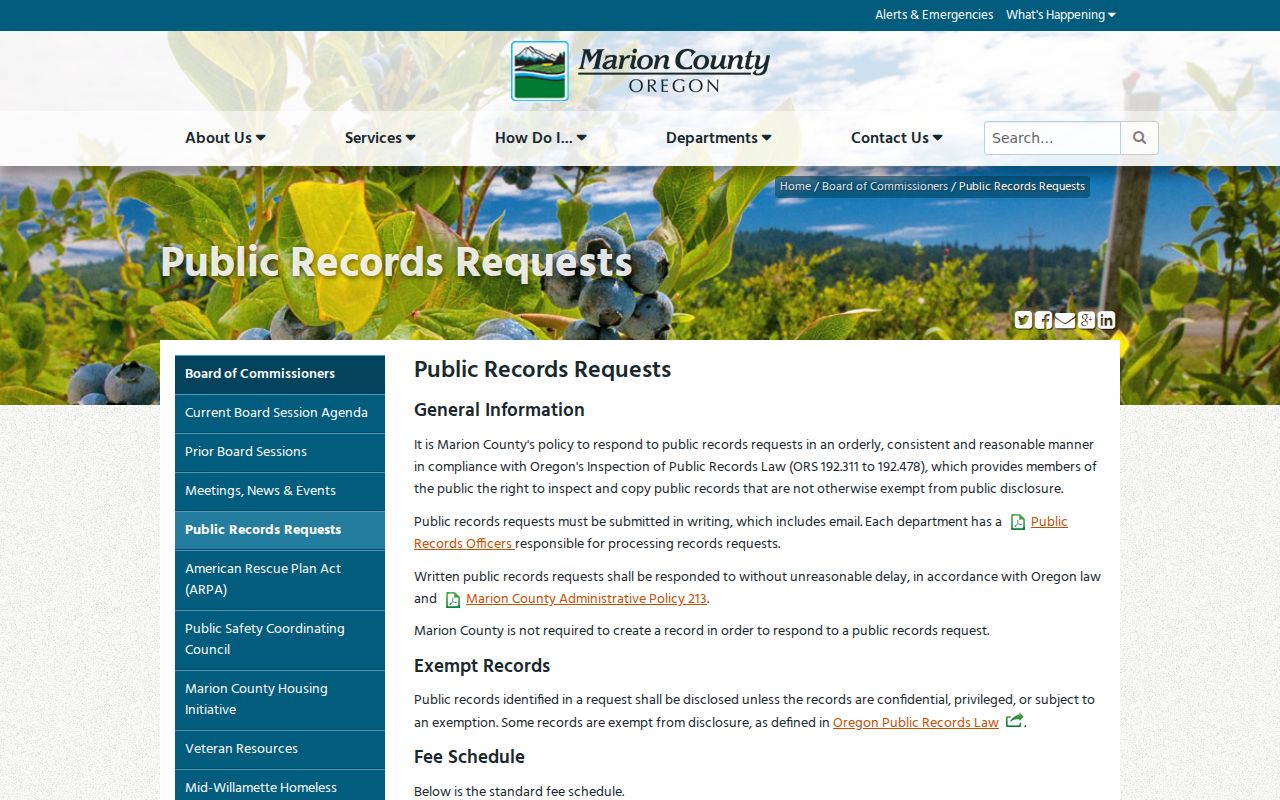
A focused request for an existing record is more likely to be processed than a broad request asking an agency to create a list it does not maintain.
Woodburn Voter Self-Service Is Personal
My Vote is appropriate when someone is checking their own registration, ballot status, or county-election contact. It does not turn the Woodburn residents directory into a public street roster. Keep self-service and public-list procedures separate so privacy limits and the purpose of each tool remain clear.
A voter who needs to update a record can use the personal service. A reader seeking a permitted list must use the separate Secretary of State request process and follow the rules that protect confidential voter information.
Woodburn searches also benefit from a date check. Registration details and ballot status concern the current election cycle, while a deed, a parcel card, or a library directory can document a different point in time. A current record may be useful for a present-day civic question but cannot prove that a person held the same address in a historic directory year. Keeping each result in its own period prevents a plausible match from becoming an unsupported claim.
Oregon My Vote describes the self-service options available to an individual voter.
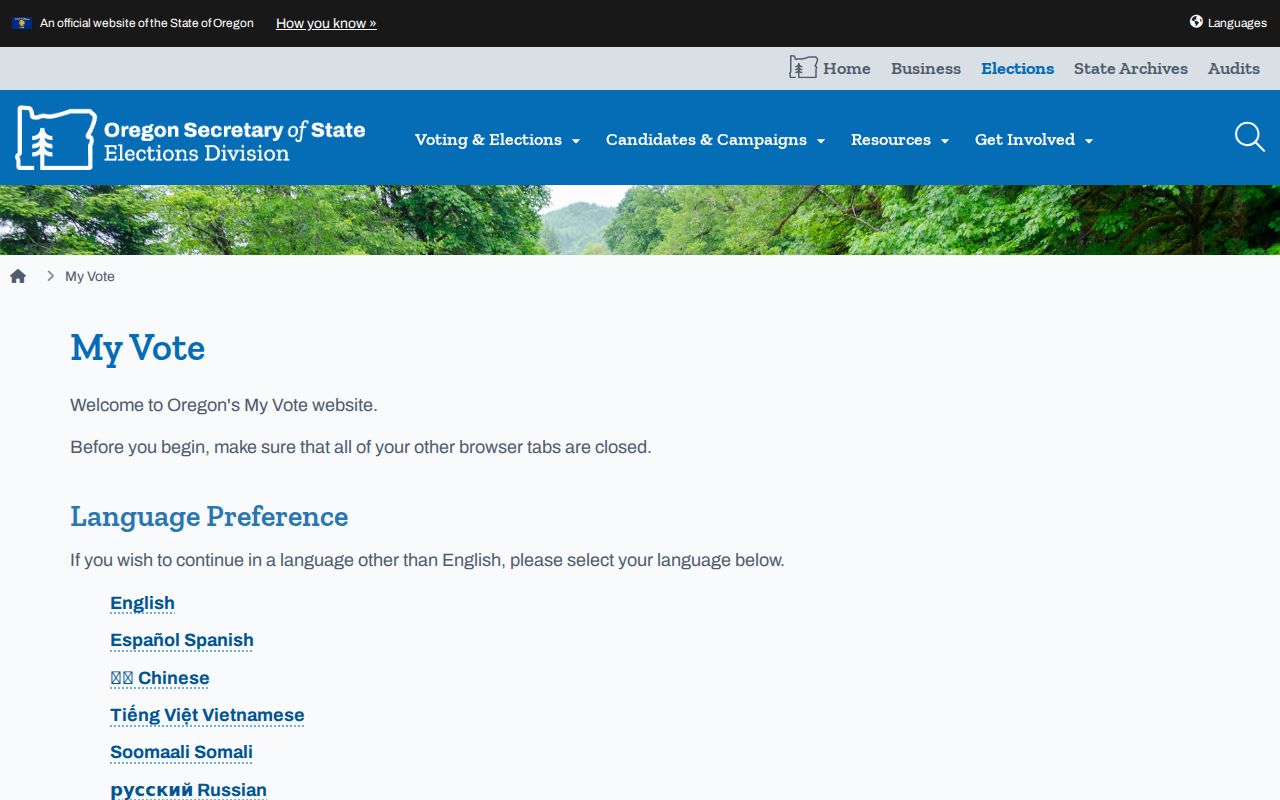
The official screen is a reminder that an elector’s own record and a statutory list request are different access channels.