
Finding Woodburn Residents Through Records
Woodburn sits inside Marion County. That fact shapes every search. Whether you start from an address, a full name, or an earlier household decides which counter holds your answer. The public property record is a bridge from address to owner, not a list of everyone at the home. A recorded document places a person in a transaction. Historic directories and library collections pin a name to a particular era, while court and vital records carry narrower access rules.
Answer the small question first. Then confirm it through a second official source. One index match can mislead in several ways. It may belong to a namesake, to an owner whose tax mail goes to another address, or to a record from the wrong era entirely. Before connecting a result to a Woodburn resident, weigh the physical address, the legal description, the dates, the party role, and the coverage the source itself claims.
- Search a known address in the county property record for the situs, tax lot, legal description, and recorded owner.
- Use City or county mapping to check the parcel and its boundary context.
- Follow owner and party names into the Clerk’s recorded-document routes.
- For earlier households, compare a directory volume, census release, and archive source.
- Send a focused written request for a record that is not published online.
A single block needs a parcel-first method. For Woodburn streets and addresses, the street directory page works through that approach one street at a time.
Woodburn Resident Records Offices
Woodburn keeps its own municipal files. The heavier counters sit in Salem. Marion County's principal property, recording, election, and circuit-court offices all serve Woodburn from there. The Clerk records instruments affecting county real property and opens the historic archive. The Assessor supplies the parcel and tax-roll view. Elections handles registration and the official list procedures. Each office answers a different question. So a request should name the record, the date range, the address, the parcel, or the document number rather than asking staff to build a resident list.
City business records stay closer to home. The Woodburn City Recorder holds them and coordinates the city's request path. Under Oregon's sequence, the city generally acknowledges or responds within five business days. Completing, estimating, or otherwise responding then follows within another ten business days. Use that route when the record belongs to the city rather than the county.
Marion County Assessor
Property records and owner assistance
Marion County, Oregon
503-588-5144
Marion County Elections
555 Court St. NE, Suite 2130
Salem, OR 97301
503-588-5041
Woodburn Addresses Open Parcel Records
An address is the strongest key here. The Marion County Assessor search accepts an account number, a map-tax-lot, a situs address, or a subdivision. Its public form offers no owner-name category. Find the parcel first. Its card can then show the owner name and mailing address, the situs address, the map-tax-lot, the property ID, the legal description, the subdivision, value figures, and exemption fields. County staff will also give an owner name and mailing address over the phone from an address or location.
Two address types appear on that card. Situs is the physical location of the property. The owner address is where tax mail goes, and it may be a post-office box, a care-of line, or an entirely different place. For deeper work, the legal description and map-tax-lot are the durable keys, carrying a property question cleanly into the deed index and plat research.
| Woodburn property field | Use in a resident search |
|---|---|
| Situs address | Locates the physical property from a known house number and street. |
| Map-tax-lot | Links mapping and property research to a specific parcel. |
| Account number | Returns the parcel account when an existing record already provides it. |
| Subdivision | Can narrow a search for a known Woodburn plat or development. |
- Parcel
- A defined property unit in the assessment system.
- Situs address
- The physical property location, separate from tax correspondence.
- Legal description
- The property key used to keep a deed trail on the correct lot.
- Index
- A finding aid that points to a record, not always the record image.
Note: A parcel card confirms recorded ownership and a tax-mailing address, but it never lists every person living in a Woodburn household.
Woodburn Deed Indexes Cover Two Eras
Marion County splits its recorded history into two eras. The Records and Archives page lists a historic deed search covering 1855-1976 and a current recorded-documents route for 1974-present. The historic portal itself claims documents back to 1850. That disagreement stands; no single starting year settles it. For any transfer in the 1974-1976 overlap, run both systems and raise the question at the Clerk counter, where public searching and viewing cost nothing.
Inside the Digital Research Room, the search controls run deep: party, recording date, document type, subdivision, lot, block, township, range, section, legal description, and maps. A return address printed on an instrument tells you where that document was mailed. It does not prove anyone lives at a Woodburn property today.
A current Marion recording screen makes the point plainly: pairing a legal description with a date filter beats a broad city-name search every time.
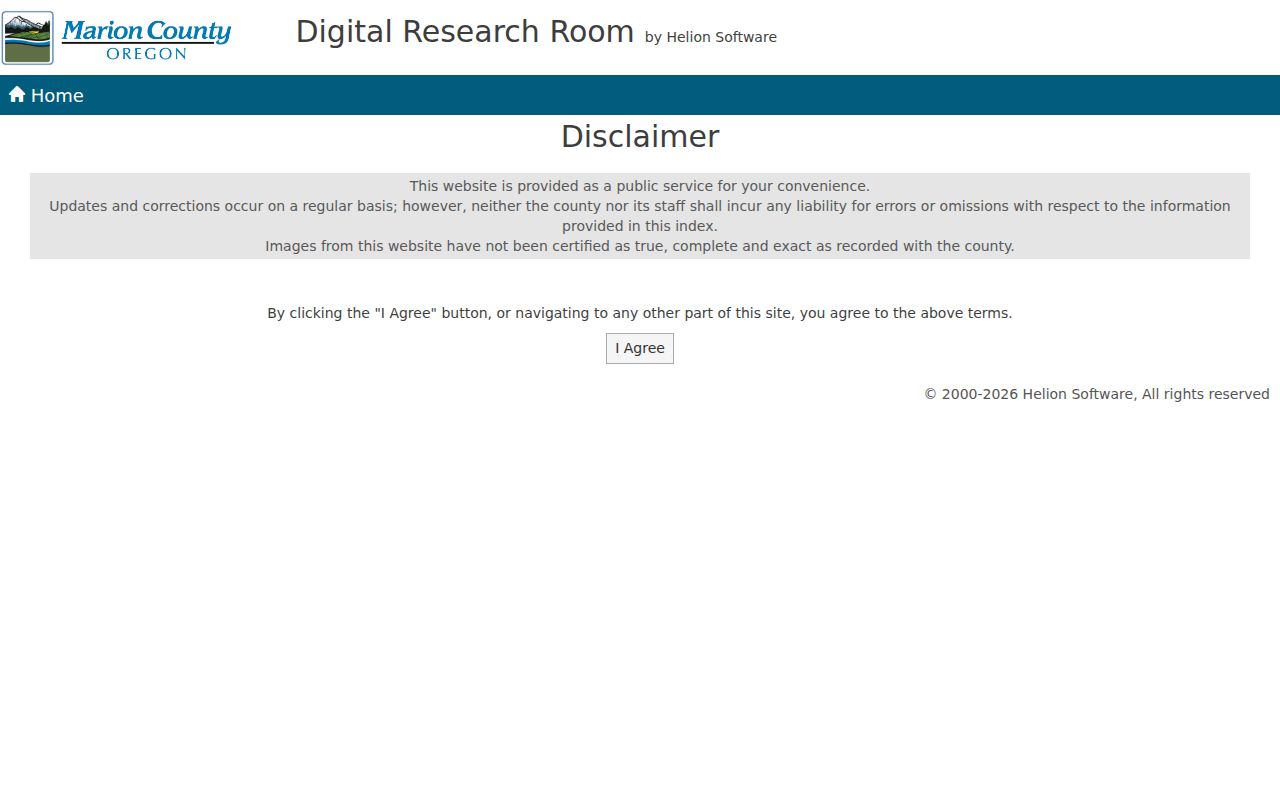
Pair the party field with the legal description. When a recorded original matters, request a certified copy from the Clerk.
Woodburn Current Resident Directory Sources
No official Woodburn directory lists every person in the city, because each source documents a narrower relationship. The property record shows ownership and tax correspondence. A voter list comes only through the statutory request route and carries exclusions. Court results document public cases, not a home address. City GIS maps the address and tax-lot context.
Official records carry a named custodian, stated coverage, and a correction path. Commercial search services can sit incomplete or stale. None of them replaces the custodian's original record. When an identity, a date, or a property connection matters, go to the original office rather than treating a compiled result as proof.
| Woodburn source | What it can establish | Keeper | Access route |
|---|---|---|---|
| Assessor parcel card | Recorded owner, mailing address, situs, tax lot | Marion County Assessor | Address search or staff assistance |
| Recorded documents | Parties, transactions, legal-description trail | Marion County Clerk | Historic/current index, counter, copy request |
| Elector file | Statutorily public fields, subject to exclusions | Oregon and county elections | Official voter-list request |
| City GIS layers | Addresses, streets, tax lots, city-limit and UGB context | City of Woodburn | Public mapping service |
| City records | Existing municipal files tied to an identified matter | Woodburn City Recorder | Written public-record request |
Woodburn Voter Records Use Two Routes
Voter records in Woodburn reach the public through two doors. My Vote at Oregon My Vote is the self-service side. There a voter checks or updates a registration, tracks a ballot, and finds county election contacts, officials, and drop sites. It browses no names and no streets. The public list route is separate, and the Secretary of State allows up to ten business days for statewide or less-than-statewide electronic list requests.
ORS 247.948 names the public elector-file fields. It also walls off birth month and day, Social Security numbers, driver-license numbers, signatures, Address Confidentiality Program information, and specified protected voters. Participation shows whether a ballot was cast, never the voter's selections. Commercial use of the list is restricted by statute.
The voter-list request page is the official channel. It posts the published list fees.
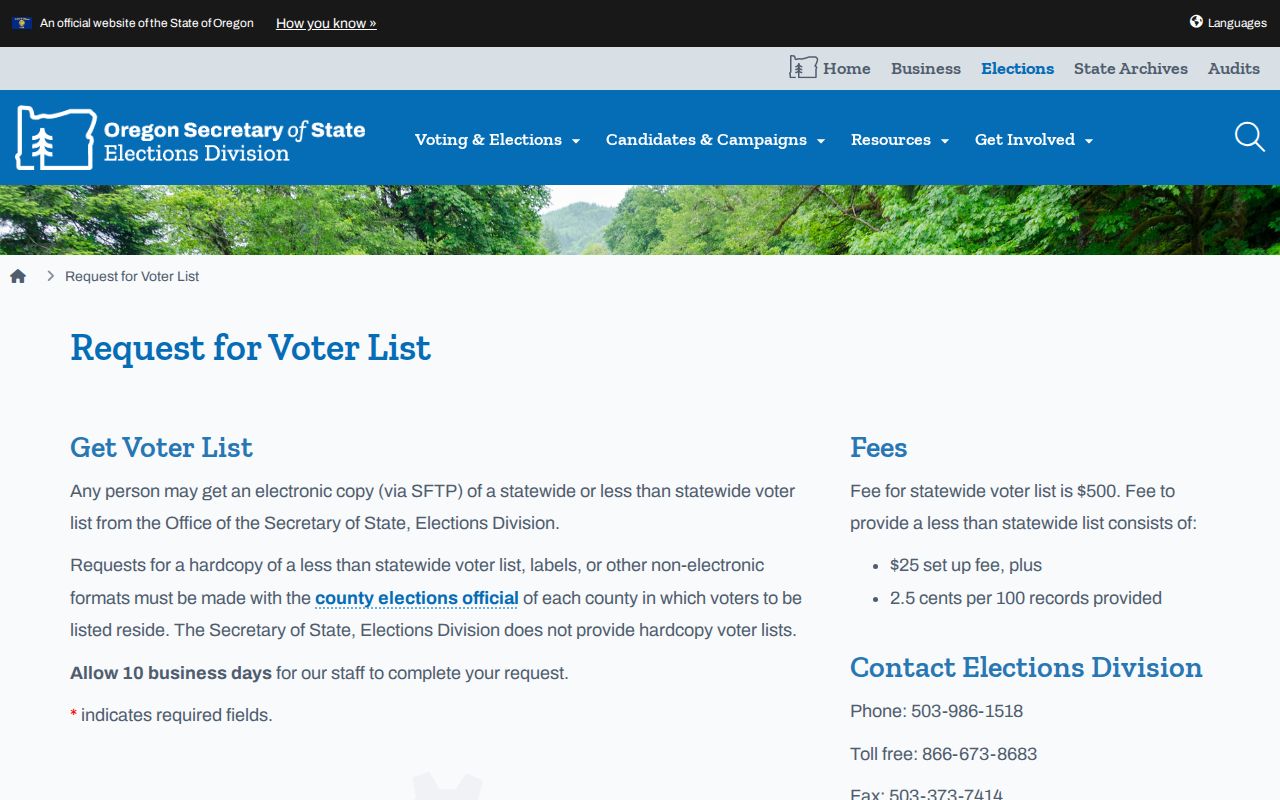
Use any list within its statutory limits. A protected or absent entry never proves that someone has no connection to Woodburn.
Woodburn Court Names Need Context
Marion County Circuit Court serves Woodburn. Oregon's free records and calendar search returns basic public case information. It also posts calendars, while the filing court keeps the official file. A public register can show party names, case number, and location. It adds filing events, hearings, judgments, and status. Document images do not appear. Protected categories include adoption, juvenile, mental-health, and certain VAWA matters. These are not lawful targets for any search.
The records lobby at the Downtown Courthouse holds six free public terminals. Record copies go by form or mail. The subscription OJCIN service covers Register of Actions and judgment records statewide. Yet it is not the official court file. Narrow any name result first. Court, case number, dates, and other reliable facts keep a match honest. Check these before a tie to a Woodburn resident.
The official start is the Oregon eCourt entry screen.
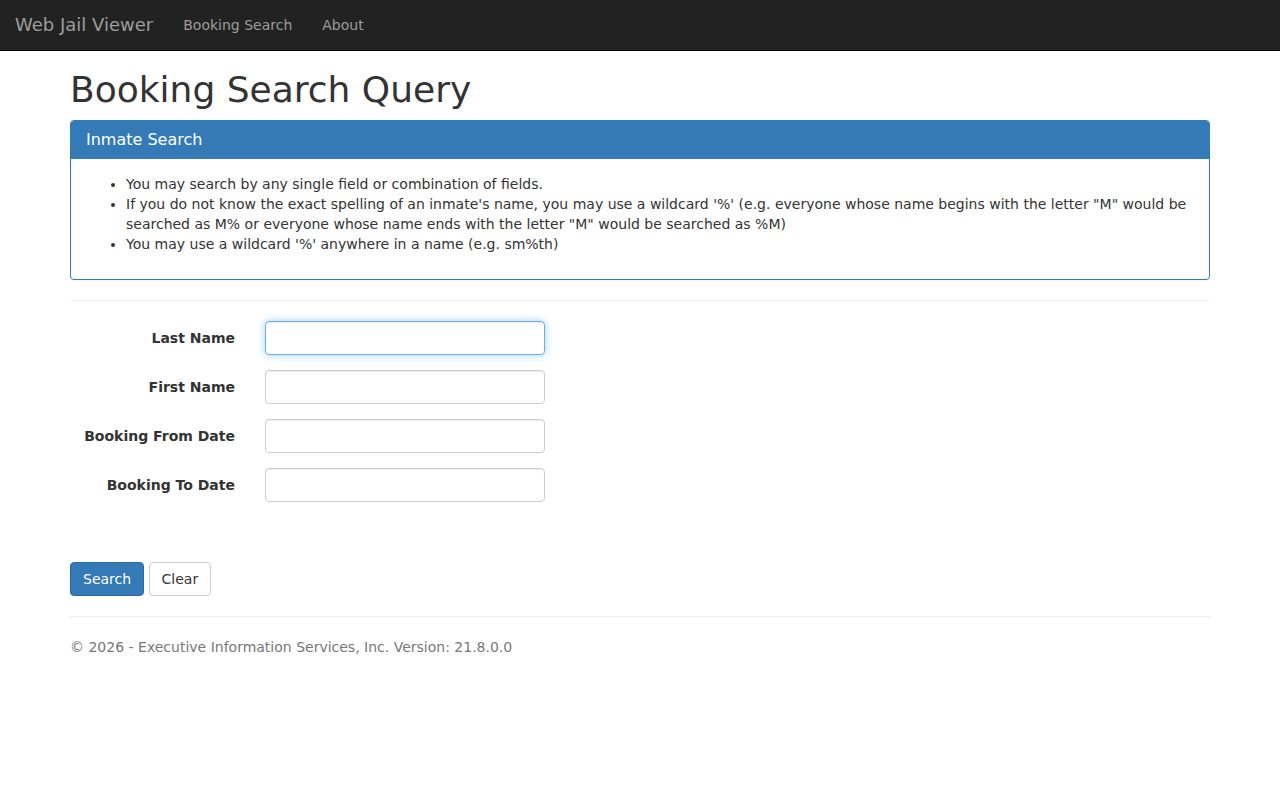
Custody status lives outside the court file. A blank roster or court result never proves that no record exists.
Woodburn Vital Records Have Limits
Oregon's Center for Health Statistics, under the Oregon Health Authority, is the enduring statewide custodian for vital certificates. Under ORS 432.121, historic access follows thresholds that differ from a current certified copy. A live birth opens after 100 years. Death, fetal death, marriage, domestic partnership, divorce, and dissolution records open after 50 years, subject to the statute's event-year language. Current certificates need eligible applicants and identity proof.
Marion County Vital Statistics issues a birth certificate only when the birth occurred in Marion County and the request lands within six months. Then the state route applies. A historic index, an archival record, and a current certificate differ in access, fields, and proof value.
Ordering channels differ at the state level. The Oregon vital-record fee page compares them.
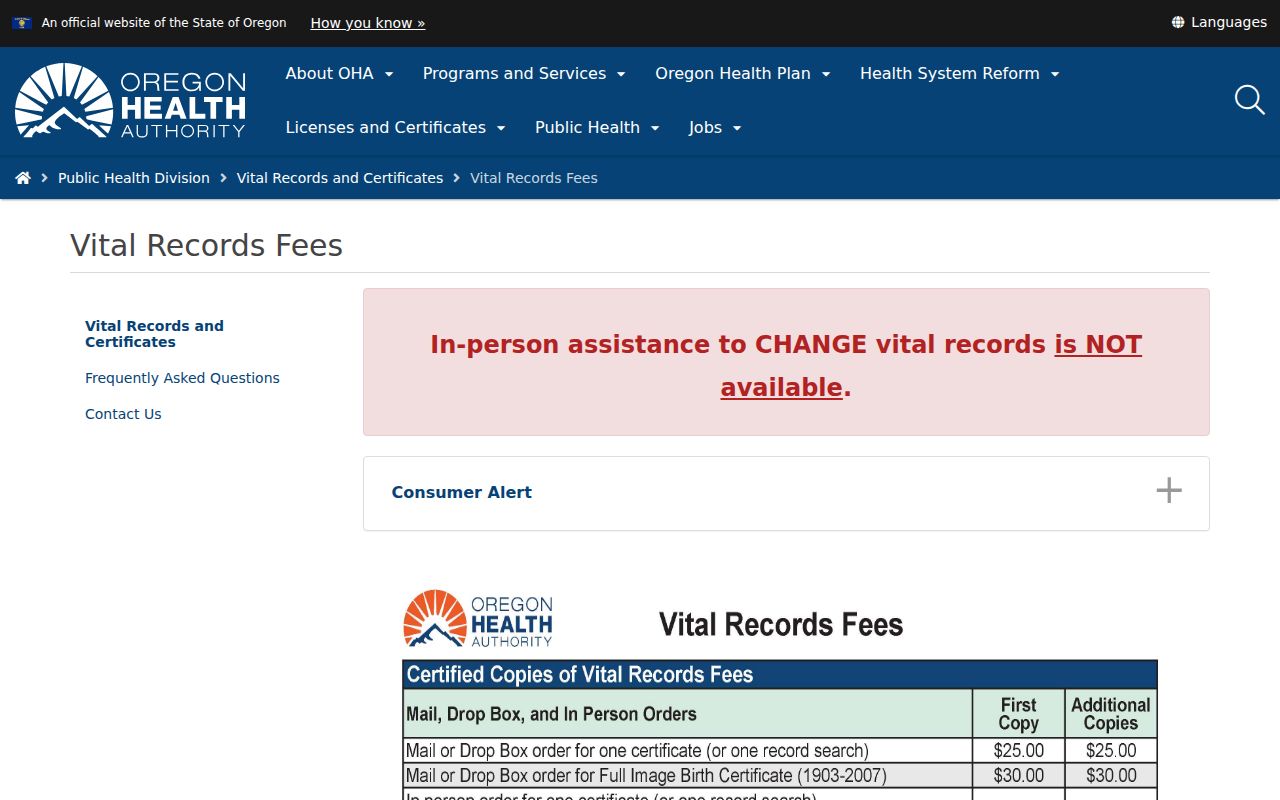
Pick the custodian and the period first. Then use the form that fits archival research or an eligible certificate order.
Woodburn Historical Resident Directories
The strongest documented directory route for Woodburn is the R. L. Polk Salem City and Marion County series. No standalone Woodburn shelf runs this long. Verified runs begin with an 1889-90 title. The series then carries Salem, Marion, Salem/Silverton/Woodburn, and business-guide segments through the 1960 entry, with known gaps. A volume can hold Woodburn alphabetical names, civic lists, business layers, and street-guide clues. Read the actual volume before claiming any entry or abbreviation.
Ancestry Library Edition is free at Woodburn Public Library. Catalog access comes there too. For deeper work, Willamette Heritage Center in Salem is the archive fallback for directories and photographs. It also serves house-history questions and cataloged regional material. Collection years and the household-tracing method sit on Woodburn city directories.
The library's digital resources page lists its licensed research collection.
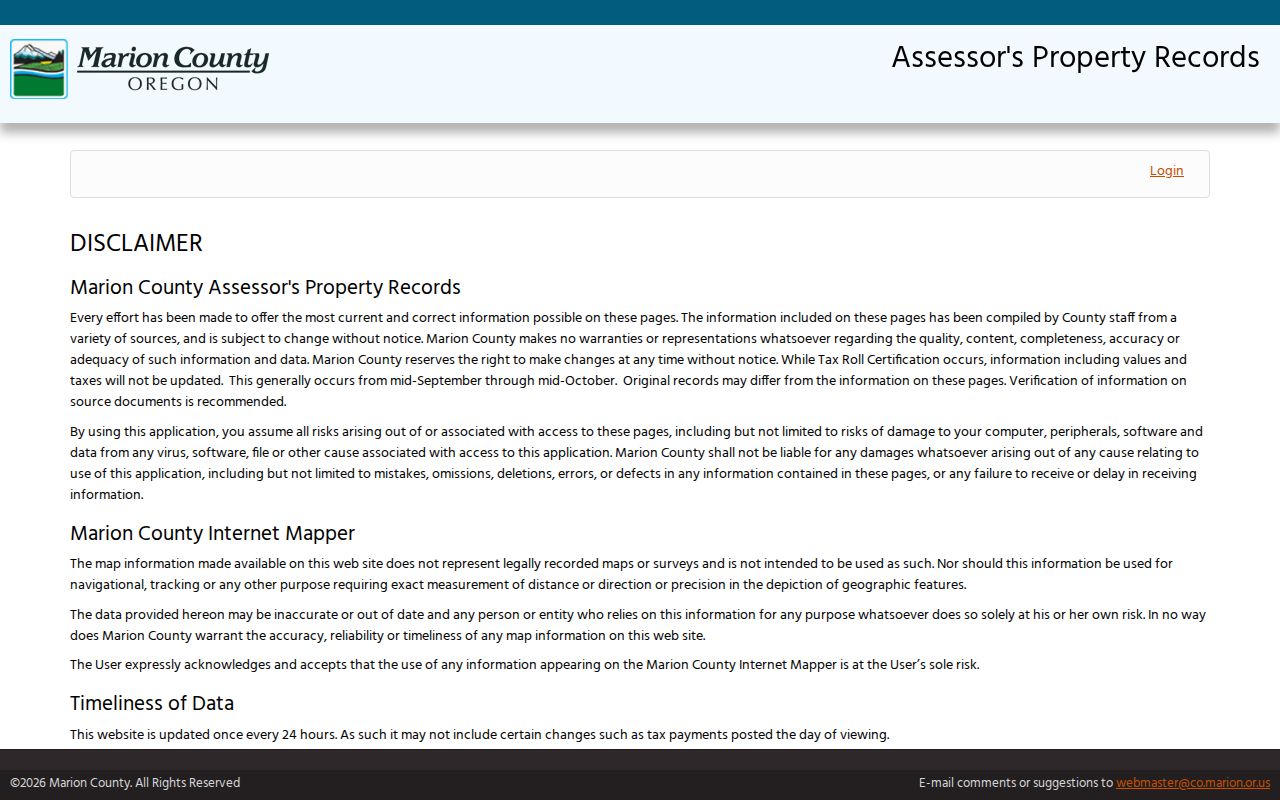
A current parcel result bridges an old address to a legal description. It cannot rewrite a historic Woodburn residents directory year.
Woodburn’s Halsey Search Quirk
Early Woodburn research can stall on a modern name alone. The city began as Halsey, was platted in 1872, and incorporated as Woodburn in 1889. Older records also carry French Prairie, rural Marion County, or the county's earlier Champoeg and Champooick labels. So run the variants. Search them across directories, newspapers, maps, deeds, and archives.
Address history has a useful visual sequence here. Excerpts from an 1878 atlas come first. Six Library of Congress Sanborn map dates run from 1890 through 1913. City aerial panels dated 1961 come next. Current tax-lot mapping finishes the run. Each source fixes place and time in its own way, and none names every household without a matching directory, deed, census, or other original record.
Woodburn Lookup Privacy Boundaries
Oregon protects some records even when others stay public. The Address Confidentiality Program offers qualifying participants a substitute address. Voter files exclude protected fields. A residence-address exemption process exists as well. Vital certificates plus certain court records carry their own access rules. DMV personal data is never a public address-directory fallback. These limits are part of accurate research, not obstacles to work around.
Lawful personal research. Use records to reconnect with family, document property history, or check a public matter. Do not use information to stalk, threaten, harass, or harm anyone.
Gaps in a Woodburn residents directory search rarely mean the trail is cold. Note: A missing result can reflect limited coverage, a protected record, a name variation, or the need to contact the proper custodian.
Woodburn Requests Fill Record Gaps
No search screen? Oregon Public Records Law still opens a door. It lets any person ask Woodburn or Marion County for material that already exists. The county wants requests in writing. It posts a fee schedule covering copies, media, postage, and staff time. City records run through the Woodburn City Recorder. A police report follows its own Support Services route. Say whether you want to inspect the record. Or say you want an electronic, uncertified, or certified copy. Then give the names, address, date range, and a description so staff can locate it. Marion County’s public-records instructions walk through the written-request process and its costs.
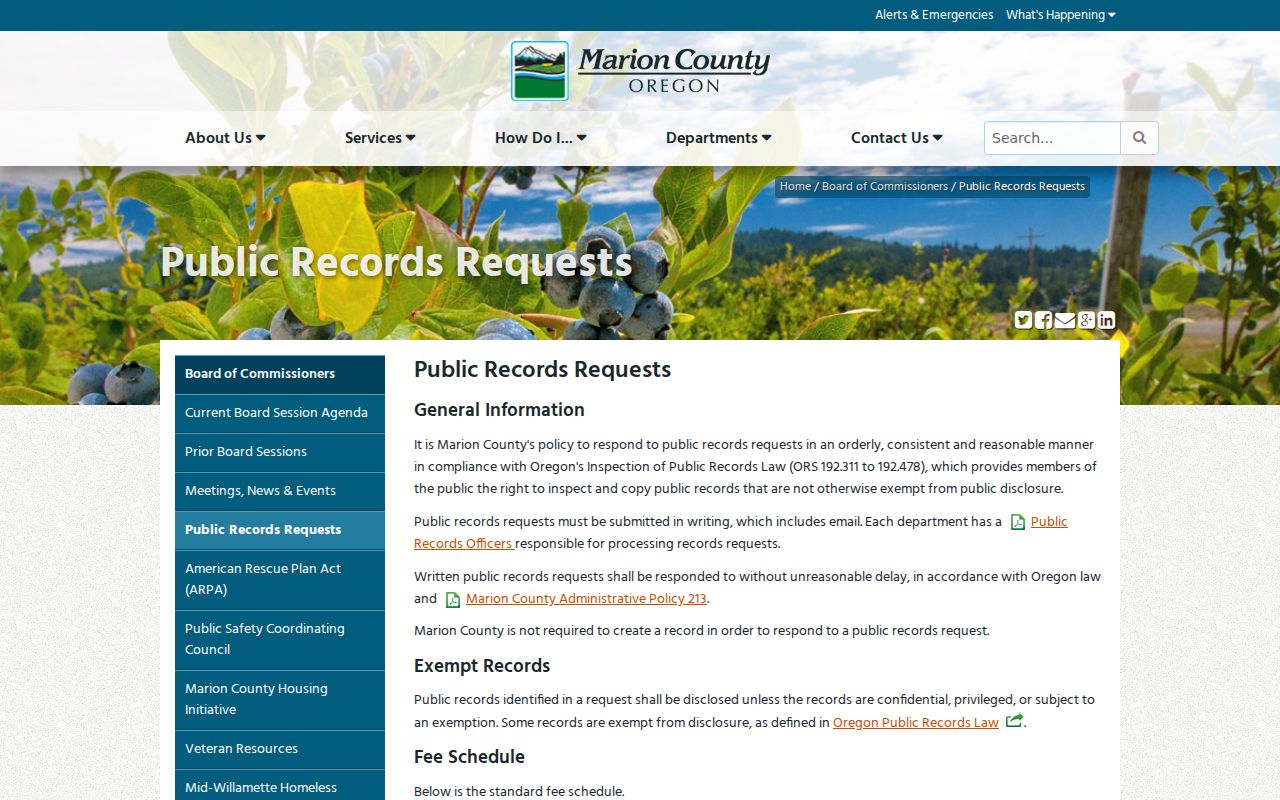
Keep the ask tight. A request for one existing record tends to move faster than a broad demand that an agency build a list it never kept.
Woodburn Voter Self-Service Is Personal
My Vote serves one voter at a time. It handles a person’s own registration status, ballot tracking, and county-election contacts. It is not a public street roster. The Woodburn residents directory and the voter system answer different questions, so keep self-service and public-list procedures apart. That protects privacy limits and keeps each tool honest about its purpose.
Need to update a registration? Use the personal service. Want a permitted list? That requires the separate Secretary of State request process, with its rules guarding confidential voter information.
Dates matter too. A My Vote check reflects the current election cycle, while a deed, parcel card, or library directory captures another moment entirely. A present-day record can settle a civic question now, but it cannot show that someone lived at the same address in an old directory year. Give each result its own period. That habit keeps a plausible match from hardening into an unsupported claim. Oregon My Vote lays out the self-service options for an individual voter.
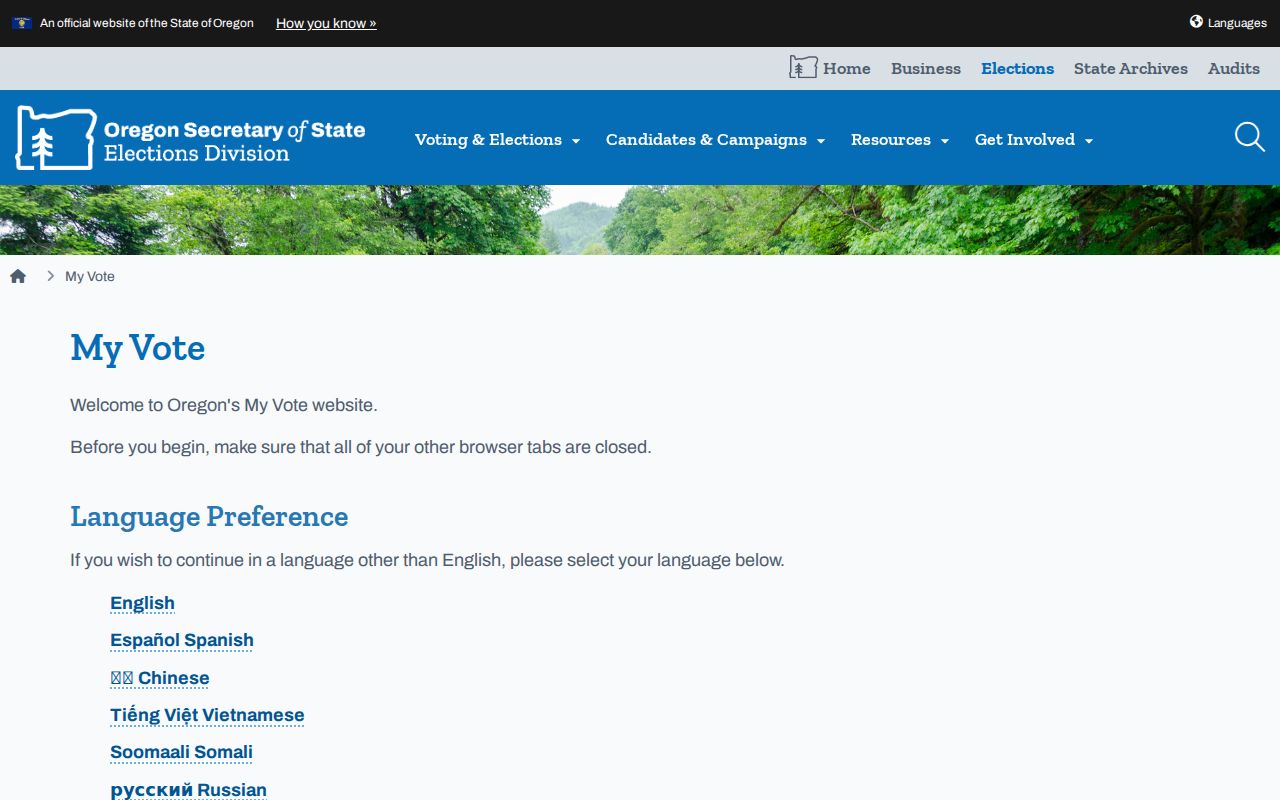
The official screen makes the split plain. One channel covers an elector’s own record, while a statutory list request travels another path entirely.